
HAPPY LIFE

WHAT NEWS?
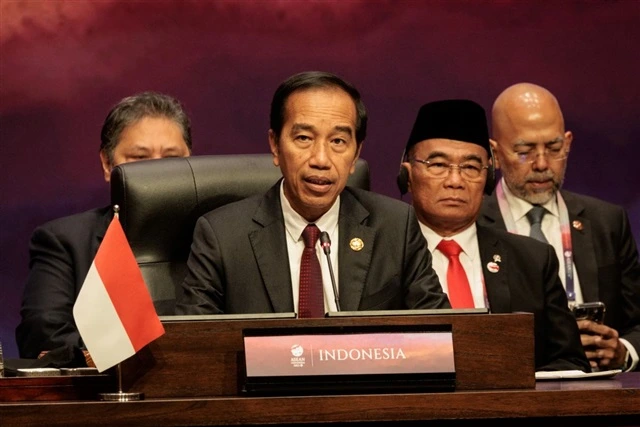
Indonesia's BRICS Entry & De-Dollarization Strategy Reshapes Geopolitics
Indonesia's BRICS Entry & De-Dollarization Strategy Reshapes Geopolitics


Trusted News - Expert Analysis - Global Coverage
Indonesia's foreign policy is undergoing one of its most consequential transformations in decades. With a sharpened focus on de-dollarization, BRICS integration, diversified economic partnerships, and vocal leadership on Global South issues, Jakarta is signaling a decisive shift toward strategic autonomy. Long guided by the doctrine of bebas-aktif—a "free and active" approach emphasizing neutrality and independence—Indonesia has historically avoided rigid alignments. But evolving geopolitical and economic pressures are pushing Southeast Asia's largest country to redefine its global role.
his strategic re-orientation became increasingly visible during the Russia-Ukraine war and Indonesia's 2022 G20 Presidency, where then-President Joko Widodo (Jokowi) refused Western pressure to isolate Russia. He insisted on dialogue and even extended an invitation to Vladimir Putin for the Bali summit—a move that reflected Jakarta's unwavering commitment to diplomatic neutrality. Today, under President Prabowo Subianto, Indonesia is doubling down on this balancing act while adding new dimensions to its international engagement.
President Prabowo Subianto, who assumed office in 2024, has doubled down on Indonesia's balancing act between the world's two most powerful nations—the United States and China. His back-to-back visits to Beijing and Washington shortly after taking office highlighted Indonesia's strategy: engage both superpowers, be dominated by neither.
Prabowo's visit to Washington yielded a negotiated trade settlement after former U.S. President Donald Trump announced steep tariffs on Indonesian exports.
Tariffs lowered from 32% to 19%, Indonesia agreed to purchase over $4 billion in U.S. energy, agricultural products, and Boeing aircraft.
Simultaneously, Jakarta secured $10 billion in investment commitments and bilateral trade reaching $135 billion with Beijing.
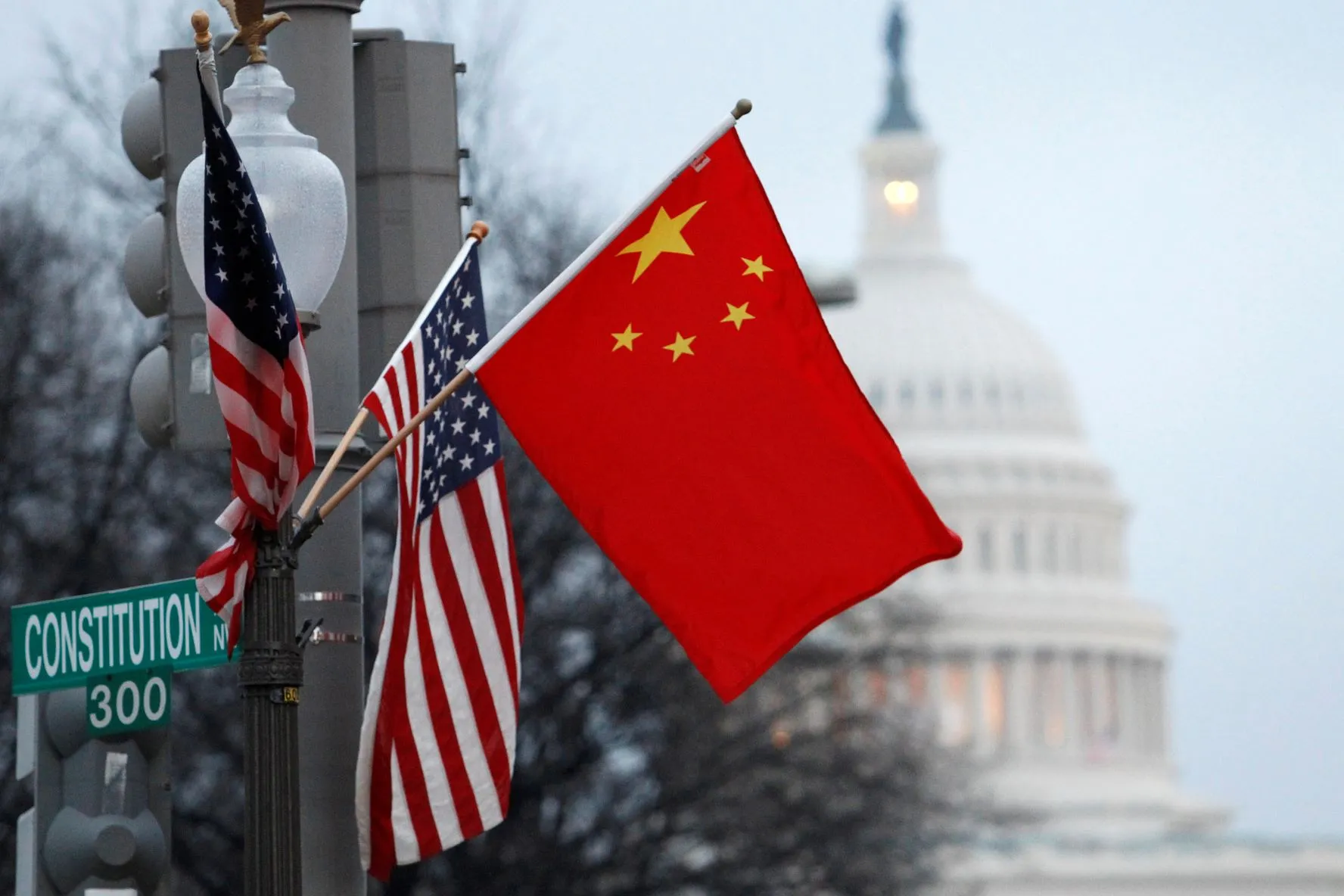
This demonstrated Prabowo's ability to maintain stable ties even under volatile U.S. trade policies while simultaneously strengthening massive economic links with Beijing. These economic incentives align with Indonesia's broader shift toward Asian-led financial and development frameworks, reflecting a sophisticated multi-vector foreign policy that refuses to choose sides in the great power competition.
Indonesia's accession to BRICS in January 2025 marks one of the most significant geopolitical decisions in its modern history. Foreign Minister Sugiono described the move as a reaffirmation of Indonesia's commitment to an independent, non-aligned but assertive foreign policy.
The decision aligns with Indonesia's long-standing leadership role in the Non-Aligned Movement while adapting it for the 21st century multipolar world. By joining BRICS, Indonesia gains:
Two major economic developments underscore Indonesia's pivot toward financial diversification, representing a quiet revolution in its economic sovereignty strategy.
Bank Indonesia announced foreign exchange operations increasingly centered on the Chinese Yuan and soon, the Japanese Yen.
"Settling transactions directly in partner currencies will ease pressure on the U.S. dollar and strengthen Indonesia's FX ecosystem," noted Destry Damayanti.
Indonesia's decision to invest $1 billion in the New Development Bank further demonstrates its shift toward multilateral financing beyond IMF and World Bank.
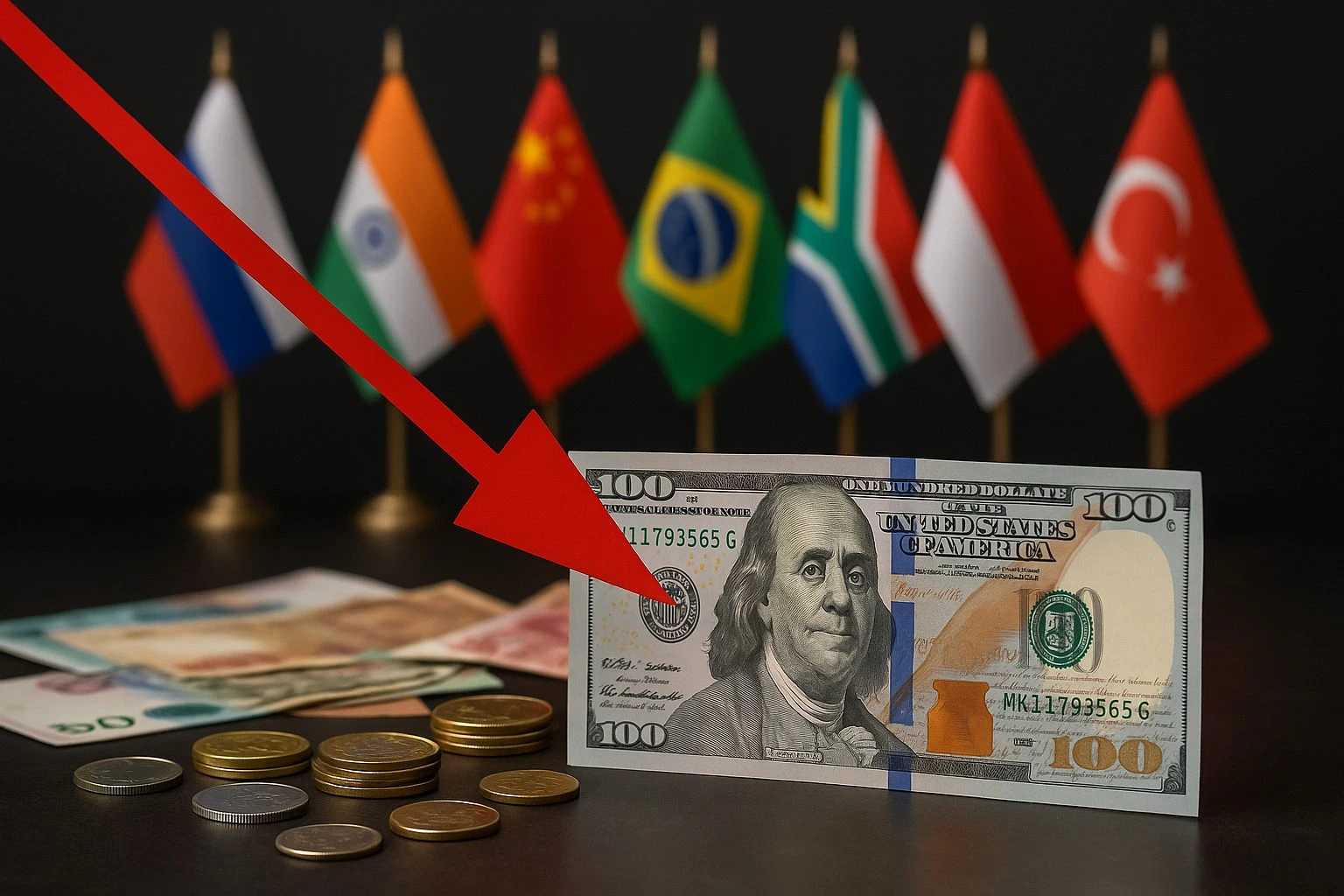
Indonesia has been deepening non-dollar settlement mechanisms since 2021, when it created a local currency settlement (LCS) framework with China. By July 2025, Indonesia had recorded over $6 billion in transactions settled in Yuan and Rupiah—highlighting the growing appeal of dollar alternatives. NDB membership offers access to infrastructure financing, participation in sustainable development projects, stronger ties with emerging powers, and a hedge against Western financial conditionalities.
Economic Affairs Minister Airlangga Hartarto emphasized: "Indonesia will actively participate in the NDB and accelerate its accession. This is about building financial resilience and ensuring our economic sovereignty in an increasingly volatile global environment."
$1 billion committed to New Development Bank
$135 billion bilateral trade (2024)
$4+ billion in US purchases secured
$6+ billion in Yuan-Rupiah transactions
$10 billion commitments (2024)
32% to 19% on key US exports
Combined, these developments signal a broader strategic vision: reduce reliance on the U.S. dollar, deepen ties with BRICS economies, maintain functional relations with the U.S. amid global volatility, elevate Indonesia's role as a Global South leader, and strengthen resilience through diversified economic partnerships.
This approach represents a sophisticated evolution of Indonesia's traditional non-alignment policy. Rather than simply avoiding entanglements, Jakarta is actively cultivating multiple partnerships to maximize its room for maneuver. The strategy acknowledges Indonesia's economic interdependence while seeking to minimize vulnerabilities that come with over-reliance on any single partner or financial system.
Indonesia's evolving foreign policy reflects a world where middle powers must adapt quickly, diversify boldly, and articulate their interests clearly. By embracing BRICS membership, de-dollarization pathways, balanced diplomacy between China and the U.S., and new multilateral financial strategies, Jakarta is positioning itself not merely as a Southeast Asian actor, but as a central voice in the emerging multipolar world order.
The implications extend far beyond Indonesia's borders. As the world's third-largest democracy, fourth most populous nation, and largest Muslim-majority country, Indonesia's choices influence regional dynamics in Southeast Asia and signal broader trends in Global South diplomacy. Its success in navigating great power competition while advancing its own development agenda could provide a model for other emerging economies seeking greater autonomy in an increasingly polarized world.
As Indonesia continues to implement this multi-faceted foreign policy strategy, the world will be watching closely. The success or failure of Jakarta's balancing act between economic pragmatism and strategic autonomy will offer valuable lessons about the possibilities and limitations of middle-power diplomacy in an age of renewed great power competition.